Published: 01/02/2024
By Amanda Hunt
Moving house is often said to be one of the most stressful things you can do; but the good news is there's plenty you can do to reduce stress levels and following our checklist for moving house is the best place to start. Some of it will seem obvious now, but is easily forgotten when you’re up to your ears in boxes and packaging!
Plan ahead
Researching well and planning ahead is half the battle when it comes to moving house. Preparation can save you an awful lot of heartache, as can accepting there'll be setbacks along the way. It’s important to stay calm enough to be able to take these in your stride so you can arrive smiling at the finishing post.
Staying on top of your finances and knowing how much it will cost to move house is also an important factor if you're to remain relaxed and in control.
Once you’ve exchanged contracts and got a completion date, it's time to start organising your move.
One month before
Select a moving day; once you've confirmed the date of your move, typically a month after exchanging contracts, things will really start moving quickly. If possible, try to avoid picking a bank holiday or a Friday as your moving day as this is when removal firms will be harder to book and probably more expensive. Remember to take the day off work.
To make sure you continue to receive your mail after moving home, you'll need Royal Mail's redirect service. You can apply up to three months before you move, informing Royal Mail of the actual date at least five days before.
- Choose your removals firm
It's time to call in the professionals. Get recommendations from friends and family members if possible, otherwise turn to the British Association of Removers (BAR) to find reputable local companies. According to our panel, BAR certified companies have fully trained staff, correct levels of insurance and are always trustworthy choices to handle your belongings.
When choosing a removals company, the experts recommend you get a full quote before making any decisions – prices you see online can be misleading and not include the full cost. Decide whether you're going to pack yourself or are willing to pay the removers to handle everything.
You'll want to make sure you have buildings insurance and contents insurance in place before the day you move. You'll need contents cover in place for the move to make sure your things are protected, should they get damaged during the move.
Don't go to the trouble of moving items to your new home that you don't want. Be ruthless about getting rid of that exercise bike you never use or those clothes you haven’t worn for years. Now’s the time for that fresh start!
If you're buying new, be sure to order them in plenty of time and arrange for delivery to coincide with your moving date. If you've been eyeing up a sofa on Made.com (we hear you!), bear in mind they can take around 12 weeks to arrive. Curtains and somewhere to sleep and sit should probably be top of the list...And we can't stress this enough - get your internet sorted ASAP! Trying to research DIY tips or shopping in your new home with no wifi is no fun.
Two weeks to go It's time to start getting those non-essential items safely packed away. Not only will this give you the feeling that you're making progress, it'll provide some much-needed space in the house. If you’re packing up your home yourself, our panel recommends you use the proper packing materials like foam and bubble wrap. Pack heavy items in small, strong boxes and be sure to keep your valuables separate from the rest. Do one room at a time, until you’re left with just the essentials the night before your move.
It can be a worthwhile investment to have your removal company package your items for you, if they offer the service. This ensures your fragile items are wrapped correctly, and often removals insurance only covers items that have been packaged professionally. It’s also a great way to try and remove some more stress from the situation.
Make a list of everyone you need to change your address with:
- Gas
- Electricity
- Water
- Council Tax
- Phone & broadband
- DVLA
- HMRC
- TV licence
- Banks, finance providers and insurance
- Your place of work
- Doctors/Dentist
- Schools
- Pet tags/microchips
Here is a simple checklist to print:
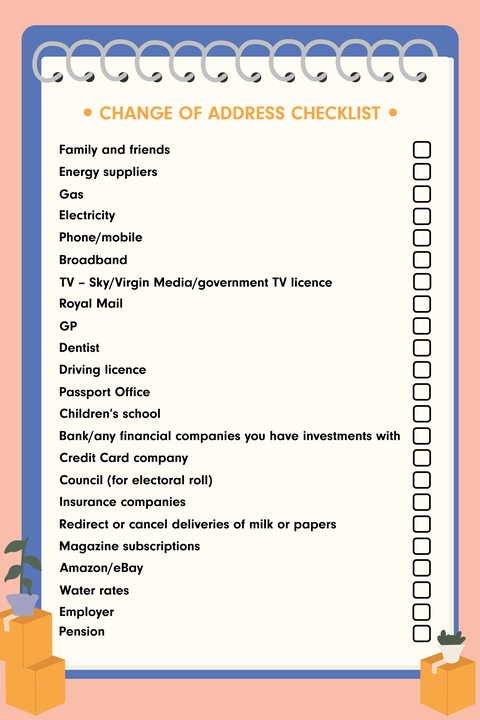
Make arrangements for young children and pets to be elsewhere on moving day. You'll have enough to contend with as it is and they could find the process rather stressful. Our panel of professionals have seen plenty of cats sneak their way into the moving vans to accompany their prized scratching posts to the horror of their owners. Save yourself the stress and have them board somewhere for the day.
Start emptying the fridge and freezer. Having to deal with chilled and frozen items on moving day is too much hassle. Start running down your supplies or make arrangements for a friend or neighbour to help store them
Make sure your removal company will have access and the ability to park at your current property and new home. And if you have a car, check the permit situation and apply in advance if it turns out you need one.
Consider employing the services of a professional cleaning company to give your new home a good going over before the furniture arrives
Last few days
Making a plan: unpacking will go a lot smoother if you come up with a plan of your new home and let the removal company know exactly where you want individual boxes left. Use clear labelling or a colour scheme to cut down on errors
Begin the process of defrosting your freezer and make sure that items such as the dishwasher are disconnected and ready to be moved
It'll be a great help to your buyer if you take the time to properly label all the property's keys. Don't forget any garage, shed and window locks if relevant. Pulling together manuals for the boiler and any appliances remaining in the home will be much appreciated
Moving day
Take final readings of your meters before leaving the property and ideally take photographic evidence that can be provided in the event of a disagreement. Do the same when you arrive at your new house, being sure to also check the gas, electricity and water are all working properly.
- Watch what you leave behind
According to our experts, garden furniture and tools are among the items most commonly left behind in a move. These tools can be expensive, so make sure you remember to pack up what you want to keep and get rid of those you don’t want.
Seeing how you’ve decorated your home every day makes it easy to forget to take your ornaments with you. Our experts often see hall mirrors, pictures and clocks left behind that can often have great value to their owners, sentimental or otherwise.
Leaving items behind can be a nuisance, but losing things altogether is even worse. The item lost most often according to one of our experts is actually the screws and bolts for dismantled furniture. Keep track of your nuts and bolts with marked envelopes or sandwich bags– and the same goes for TV remotes and phone chargers too.
Our panel agreed that collecting the keys on the moving date is one of the most stressful parts of a house move. The removal company will require access to the new house when they arrive with your belongings. Make arrangements for them to get inside and start unloading as soon as possible to avoid delays and additional charges.
Once you're in it's recommended you change the locks on the property. It's impossible to say whether there are spare keys to your home floating about, so in this instance it makes sense to be cautious. When working out what costs are involved in buying a house, it pays to take these kinds of expenses into account as everything adds up.
Relax and enjoy
Now is the time to crack open a bottle of champagne, celebrate your achievement and begin to enjoy your new home.