
Published: 28/04/2024 By Amanda Hunt
The average UK rent for new lets has now reached £1,223, a +7.2% rise in the average UK rent over the last year. This is a whopping £960 extra per year (or £80 per month) compared to a year ago.It should be noted however, that this rate of inflation is lower than we’ve seen at any time during the last two years. In 2023 alone, rental growth dropped from +11.4% to +8.2%.
Average rents also vary across the country, from a high of £2,121 per month in London to £695 per month in the North East.
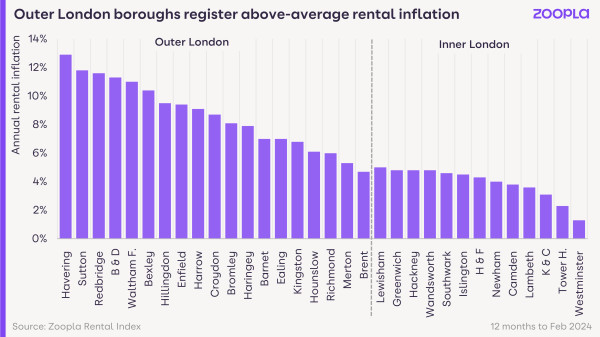
In outer London however, boroughs continue to register above-average inflation. This stretches to +12.9% in Havering, where the average annual rental bill is now £2,160 more expensive than a year ago. Take a look at Zoopla's useful graph for London rental price inflation: with Waltham Forest and Redbridge both landing in the top 5 of highest inflation.
So what factors influence rental prices?
One of the most important factors that influences rental prices is the level of demand from renters versus supply of rental properties. A chronic mismatch between supply and demand has been the defining feature of the UK rental market for the last three years. It’s the main reason rental inflation was so sharp during that time.
Rental growth is also impacted by earnings growth - a strong jobs market and subsequent wage rises keeps demand high and means tenants can weather rent increases.
In the last year, higher mortgage rates have also impacted rents as they’ve prevented more would-be first-time buyers from owning a home and boosted demand for rental homes.
Some renters have escaped the steepest rises by staying in their existing homes. Year-on-year rises for established tenancies rose at the slower rate according to the Index of Rental Prices from the Office for National Statistics. When renters move and are faced with higher rents and a limited supply of homes on the market, they're more commonly considering renting smaller homes, moving to cheaper areas or house-sharing to reduce costs.
House-sharing reduces the cost of housing per person but it comes at the personal expense of privacy and space. Data from the Resolution Foundation found private renters have experienced a -16% reduction in floor space per person over the last 20 years.
What’s next for the rental market?
We believe that the rental market is now past peak rental growth after starting to cool in the final months of 2023. Zoopla for example, project that UK rental inflation will fall to +5% in 2024, but affordability will not improve as earnings growth is also expected to slow. Continually low levels of net-new investment in rental properties means supply will remain below average, supporting rent rises. However, slower increases will be extremely welcome news to renters who have faced steep hikes in the last two years!